 Bio-gen Extracts
Why Are We Still Talking About Skin Hydration the Wrong Way?
A science-led look at hydration, barrier function, oxidative balance and the emerging role of carotenoid nutrition.
THE CENTRAL QUESTION
If consumers have access to more skincare products than ever before, why do concerns around dry, dehydrated and prematurely ageing skin continue to grow?
The hydration conversation needs a reset
For years, the skincare industry has treated skin hydration as a surface problem.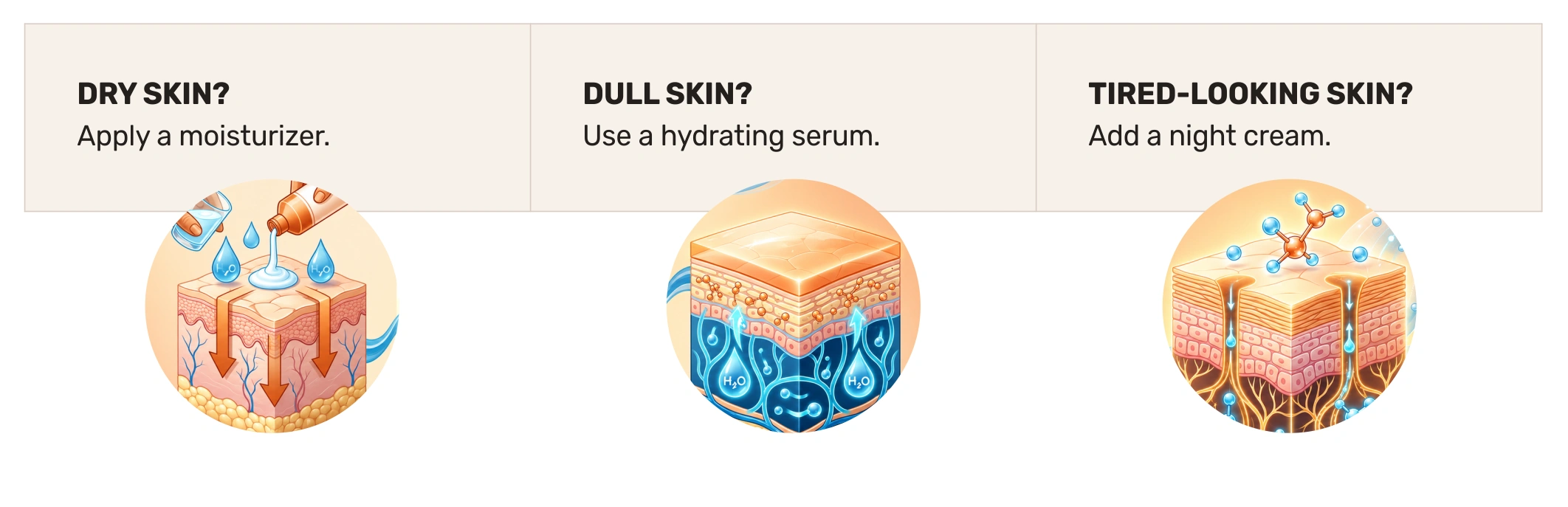
These recommendations certainly have their place. Topical skincare remains an important part of maintaining healthy-looking skin. Yet they raise an important question.
Perhaps the answer lies not in the products themselves, but in how we define hydration.
For decades, hydration has largely been viewed as something we add to the skin. Modern skin science, however, suggests that hydration is equally about the skin’s ability to retain, regulate and protect its own moisture. And that ability is determined long before a moisturizer touches the skin.
The Modern Skin Challenge
Healthy skin is remarkably efficient at managing water.
This is largely due to the stratum corneum, the skin’s outermost protective layer. Often described as a “brick-and-mortar” structure, it consists of corneocytes surrounded by a matrix of epidermal lipids, primarily ceramides, cholesterol, and free fatty acids. Together with Natural Moisturizing Factors (NMFs)—water-binding molecules naturally present within the skin—these components continuously work to retain moisture and minimise transepidermal water loss (TEWL).
As Peter Elias and colleagues demonstrated through decades of skin barrier research, the stratum corneum is far more than a passive covering. It is an active biological system responsible for maintaining hydration, protecting against environmental insults, and preserving overall skin homeostasis.
Hydration Is More Than Water
Hydration is often mistaken for water content. In reality, healthy skin hydration relies on a network of biological processes working together.
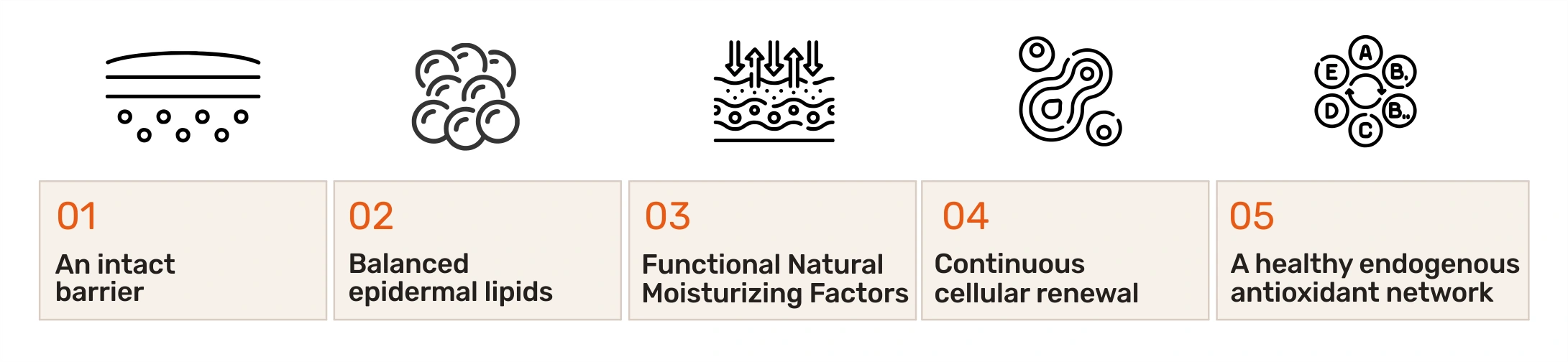
Human skin naturally contains antioxidants such as vitamin C, vitamin E, glutathione, coenzyme Q10 and carotenoids. Together, these molecules help defend the skin against reactive oxygen species generated through UV exposure, pollution and normal cellular metabolism.
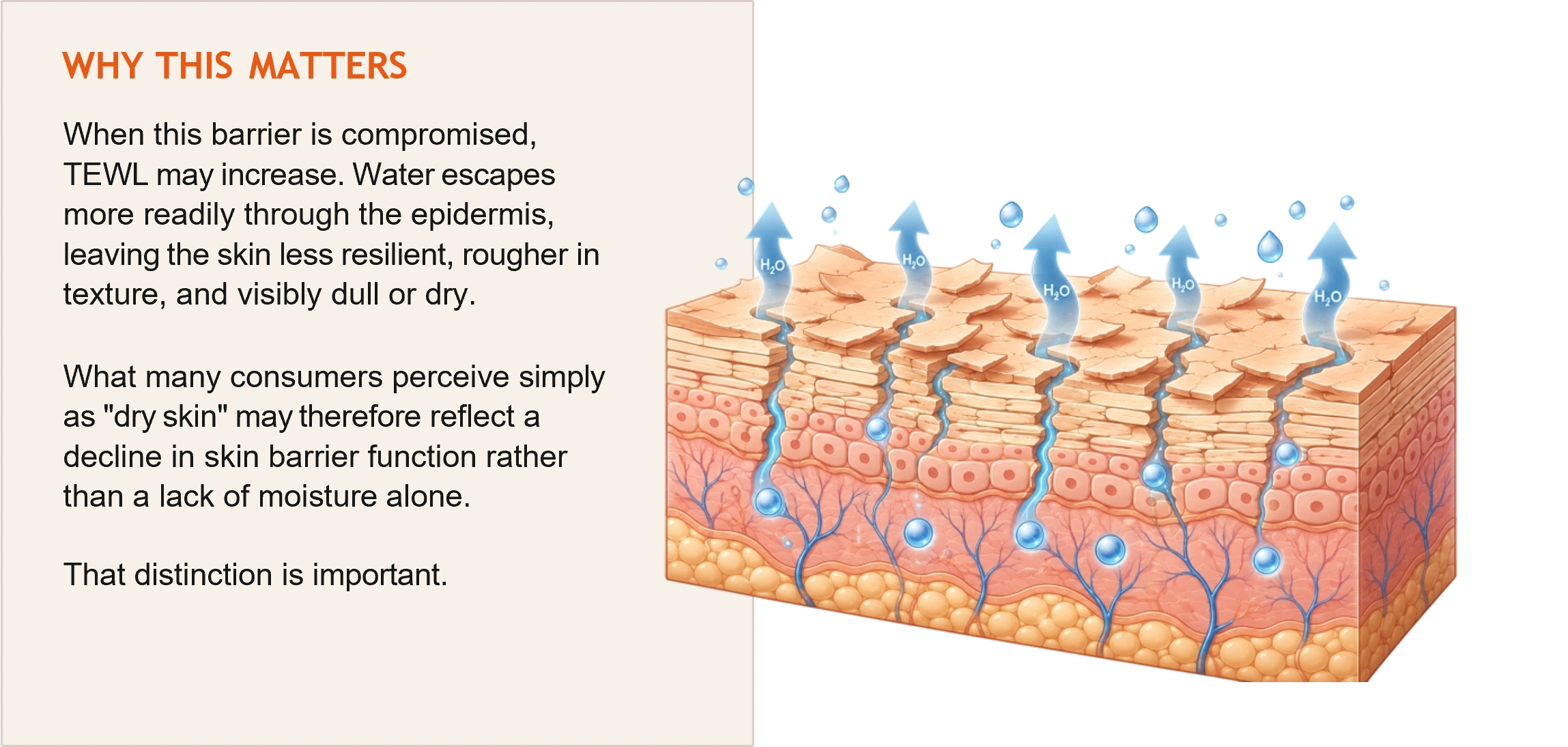
When oxidative stress begins to overwhelm these natural defence systems, the consequences extend well beyond free radical damage. It can initiate lipid peroxidation, impair epidermal lipids, alter cellular signalling and contribute to degradation of extracellular matrix proteins.
Together, these changes may weaken barrier function and increase Transepidermal Water Loss (TEWL) This changes the question entirely. Instead of asking “How do we hydrate the skin?”,
perhaps we should be asking:
“How do we help the skin retain its hydration?”
Looking Beyond the Surface
This is where internal nutrition is beginning to reshape the conversation.
Skin is not simply a surface waiting to be treated. It is a metabolically active organ that continuously renews itself and depends on nutrients to maintain its structure and function.
While topical skincare supports the outside, nutritional interventions may complement these efforts by supporting the biological systems responsible for barrier integrity, antioxidant defence and skin resilience.
This growing understanding has contributed to transforming “beauty from within” from a marketing phrase into an increasingly researched area of skin science.
Why Carotenoids Are Receiving Growing Attention
Among the nutrients being explored, carotenoids are attracting increasing scientific interest. Carotenoids are among the predominant antioxidants naturally present within the epidermis, where they are continuously depleted by UV exposure and other environmental stressors.
Traditionally recognised for their role in eye health, they also accumulate naturally within the skin and form part of its endogenous antioxidant network.
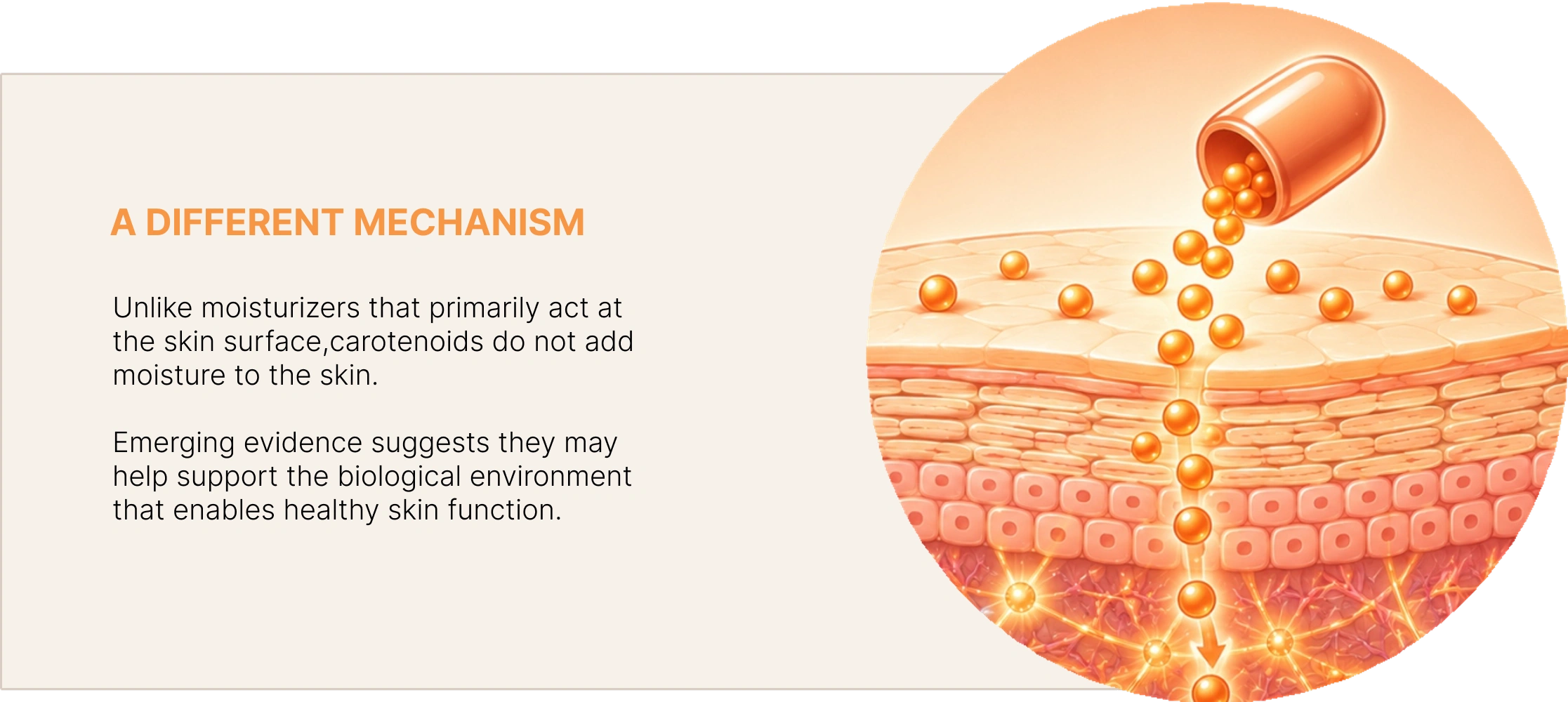
By helping manage oxidative stress, carotenoids may contribute to preserving epidermal lipids, supporting barrier integrity and reducing processes associated with excessive TEWL. Collectively, these mechanisms may help maintain the biological environment required for healthy skin hydration while supporting overall skin quality.
As different carotenoids possess distinct chemical structures and antioxidant properties, researchers are increasingly interested in understanding how comprehensive carotenoid nutrition may support skin biology.
Hydration is not only about adding water. It is also about protecting the systems that prevent water from being lost.
From Biology to Clinical Evidence
This evolving understanding is reflected in emerging clinical research.
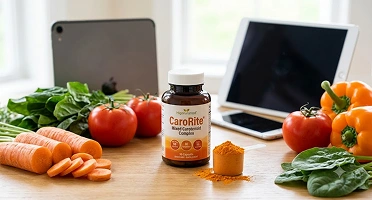
In a randomized, double-blind, placebo-controlled study involving women aged 40-55 years, CaroRite®, a natural mixed carotenoid complex, was evaluated for its effects on objective markers of skin health over 12 weeks.
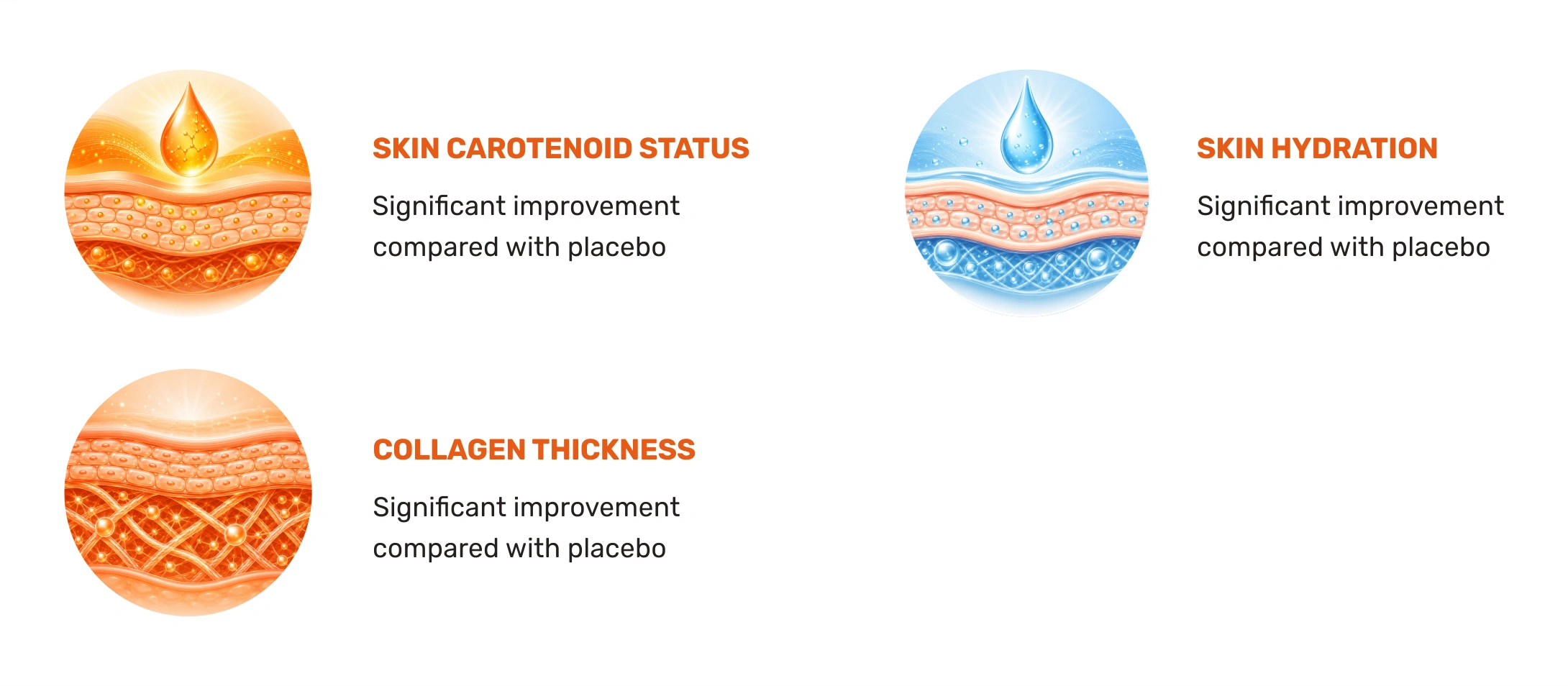
These findings suggest that improving the skin’s antioxidant status through nutritional carotenoids may support multiple aspects of skin physiology rather than focusing on a single cosmetic endpoint.
Importantly, CaroRite® is not positioned as a moisturizer. Its relevance lies in supporting biological processes associated with skin hydration, structural integrity and resilience over time.
Where the Industry Goes Next
The future of skin hydration is unlikely to be defined by another moisturizer, another serum or another temporary fix.
It will be defined by a deeper understanding of skin biology.
Hydration is increasingly being recognised not merely as a cosmetic outcome, but as a reflection of barrier integrity, oxidative balance and overall skin function. As formulators continue to move from symptom management to mechanism-based innovation, ingredients that support the skin’s own biological resilience are likely to become increasingly relevant.
References
- Elias Stratum corneum defensive functions: An integrated view. Journal of Investigative Dermatology. 2005.
- Proksch E, Brandner JM, Jensen The skin: An indispensable barrier. Experimental Dermatology. 2008.
- Rawlings AV, Harding Moisturization and skin barrier function. Dermatologic Therapy. 2004.
- Darvin ME, Sterry W, Lademann J, Vergou The role of carotenoids in human skin. Molecules. 2011.
- Stahl W, Sies H. Bioactivity and protective effects of natural carotenoids. Biochimica et Biophysica Acta. 2005.

#biogenextracts #choosegoodhealth #nutraceuticals #lutein #lutegen #carotenoids #cognitivehealth #telomere #healthyageing #healthyaging #eyehealth #cft #centralfovealthickness
Like what you see? Share with a friend.


Related Articles
For latest updates